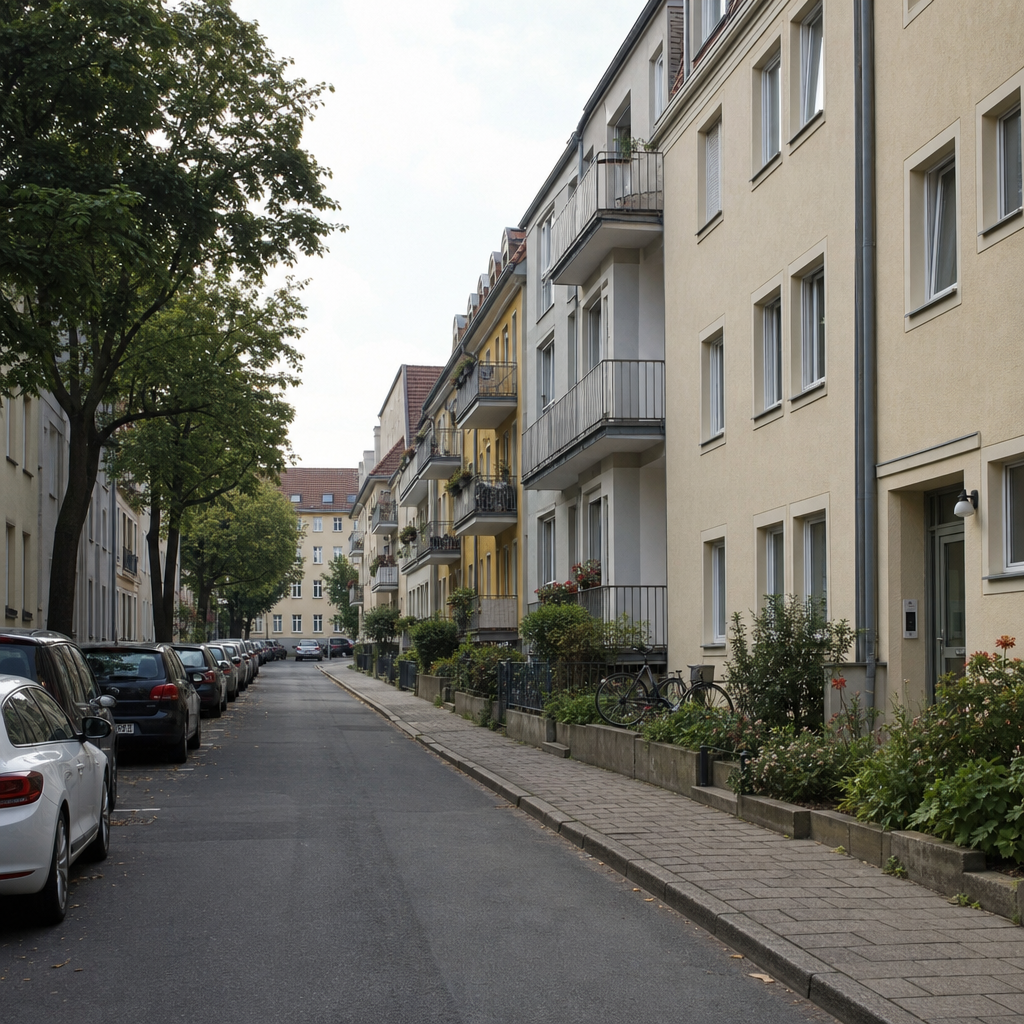
House for Rent in France: Where the Listings Really Are

Finding a house for rent in France sounds simple until you actually start looking. You open the classic portals, filter by city, and within days you notice a strange pattern: the best listings seem to disappear before you even get a chance to call. That is not your imagination. The French rental market has quietly shifted, and today most quality offers circulate through channels that traditional search engines barely index.
Whether you are a student heading to Lyon, a professional relocating to Paris, or a family looking for a countryside home in Provence, understanding where listings actually appear first is the difference between signing a lease in two weeks and searching for two months. This guide walks you through the real map of french rentals, the paperwork landlords expect, seasonal timing, and how to make sure you never miss an opportunity again. If you want to skip the theory and jump straight into aggregated listings, Roogle already scans the sources most seekers overlook.
Where a House for Rent in France Is Advertised First
The French rental ecosystem is deeply fragmented. A landlord in Bordeaux may post on a local Facebook group at 8 a.m., forward the same listing to a friend on WhatsApp at 9 a.m., and only publish it on a major portal 48 hours later, if at all. By that point, the property has often already been visited and reserved.
Here is where quality offers typically surface first:
- Neighborhood Facebook groups such as 'Locations Paris entre particuliers' or 'Appart à louer Lyon'
- Telegram channels dedicated to specific cities or expat communities
- WhatsApp broadcast lists run by former tenants or building managers
- Instagram accounts of small independent agencies
- Local subreddits like r/paris, r/toulouse, or r/france
- University and company intranets for student and corporate housing
- Word of mouth through coworking spaces, cafés, and neighborhood boards
If you want to rent house in france efficiently, you cannot rely on a single source. You need visibility across all of them simultaneously. That is exactly why aggregation platforms have become essential. You can explore the full France country feed on Roogle to see how listings from these scattered channels are unified into one structured stream.
French Rentals Between Agencies and Private Owners
When searching for a house rental in france, you will encounter two very different worlds: professional agencies (agences immobilières) and private landlords (particuliers).
Agencies offer legal security, standardized contracts, and a clear process, but they charge fees equivalent to roughly one month of rent, capped by law based on the city zone. Their listings usually appear on major portals but often with a delay of several days.
Private owners skip the middleman. Their listings appear first on community channels, cost less overall, and allow direct negotiation. The trade-off is that you must handle the entire dossier yourself and be quicker than the competition, since a well-priced private listing in Paris or Nice can receive fifty inquiries within hours.
A smart strategy combines both: use agencies as a safety net while monitoring private channels aggressively. This is where real-time alerts become invaluable.
Apartment for Rent in France: The Dossier Landlords Expect
Even the perfect apartment for rent in france slips through your fingers if your paperwork is not ready. French landlords are famously cautious, and they usually pick the tenant whose file is complete, clean, and delivered within hours of the visit.
A standard dossier includes:
- Valid ID (passport or national ID card)
- Proof of income for the last three months (payslips or freelance invoices)
- Employment contract or proof of student enrollment
- Last three rent receipts or a certificate from your current landlord
- Last tax notice (avis d'imposition)
- Bank details (RIB)
- Guarantor documents if applicable
Landlords generally want your monthly income to be at least three times the rent. If you earn 2 400 € net, expect to qualify for roughly 800 € in rent. In tight markets like Paris, Lyon, or Bordeaux, this ratio is often enforced strictly.
Pro tip: prepare a single, well-organized PDF containing all documents. Name it clearly, for example 'Dossier_Location_LastName_FirstName.pdf'. When a landlord asks for your file, you send it in one click. That responsiveness alone can put you ahead of dozens of other candidates.
Rent Apartment in France Without a French Guarantor
One of the biggest hurdles for internationals trying to rent apartment in france is the guarantor requirement. Traditionally, landlords ask for a French-resident guarantor earning three to four times the rent. If you just arrived in the country, this is nearly impossible to provide.
Fortunately, several solutions exist:
- Visale — a free public guarantee scheme managed by Action Logement, open to anyone under 30 and to newcomers within their first year of employment
- GarantMe, SmartGarant, Cautioneo — private paid guarantors that cost around 3.5 to 5 % of annual rent
- Bank deposit — some landlords accept a blocked bank guarantee equivalent to several months of rent
- Employer guarantee — international companies sometimes vouch for relocated employees
Mentioning Visale or a certified private guarantor in your first message to a landlord instantly boosts your credibility. It signals that you understand the local system and that the financial risk on their side is covered.
France Rental Timing: Seasonality and Competition
Timing shapes everything on the french rentals market. The same apartment can attract three inquiries in February and eighty in September. Understanding the calendar helps you either move fast during peak season or negotiate calmly during quieter months.
Peak season (June to October) aligns with student arrivals, professional relocations, and the new academic year. Competition is fierce, prices are firm, and listings vanish within hours. If you are searching now, expect to visit properties the same day they are posted and to send your dossier immediately.
Shoulder season (November to February) is calmer. Landlords are more open to negotiation, and you can often visit properties at your own pace. This is the best window for families and long-term relocations.
Spring (March to May) is a hybrid period. Corporate transfers begin, and early-bird students start scouting for autumn leases.
City-specific patterns also matter:
- Paris: constant pressure, but slightly easier in December and January
- Lyon, Toulouse, Montpellier: student-driven peaks in August and September
- Nice, Marseille, Bordeaux: summer tourism inflates short-term rentals, making long-term deals scarce until October
- Rural areas and small towns: less seasonal, more dependent on individual timing
Whatever the season, one rule remains constant: the first candidate with a complete dossier usually wins. Speed matters more than perfection.
Covering French Apartment Rentals Across Every Source
Manually monitoring dozens of Facebook groups, Telegram channels, subreddits, and agency websites is exhausting and, frankly, impossible to sustain. This is where modern aggregation tools change the game.
Roogle was built precisely for this fragmented reality. Instead of chasing listings across a dozen apps, you set your criteria once — city, budget, number of rooms, type of property — and receive real-time alerts via Telegram, email, or push notifications the moment a matching listing appears anywhere across monitored sources. Each alert includes a direct link to the original post, so you can contact the landlord immediately without any intermediary.
Concrete benefits for anyone hunting france apartments for rent include:
- Hours saved every week by eliminating manual browsing
- Access to hidden community listings that never reach the big portals
- First-mover advantage thanks to instant notifications
- Unified interface replacing a dozen fragmented feeds
- Structured data (price, surface, location) even when the original post is a chaotic paragraph
A quick example: Camille, a graphic designer moving from Nantes to Lyon in August, spent three weeks refreshing portals with no result. After setting up Roogle alerts, she received a Telegram notification for a two-bedroom in Croix-Rousse at 9:14 a.m., replied within four minutes, visited that evening, and signed the lease the next day. The listing had originally been posted in a private Facebook group with 12 000 members.
You can launch your own search directly from the main search page, configure your filters, and let the alerts come to you.
Practical Checklist Before You Start Contacting Landlords
Before firing off your first message, make sure you have:
- A complete, single-PDF dossier ready to send
- A short, polite introduction message in French (even a simple one)
- A clear budget including charges (charges comprises)
- A guarantor solution identified (Visale, GarantMe, employer, etc.)
- Real-time alerts activated on all your target neighborhoods
- Availability to visit within 24 to 48 hours of a listing appearing
That combination — preparation plus speed plus visibility — is what separates successful renters from frustrated ones in the current French market.
Conclusion: Stop Searching, Start Seeing Everything
The French rental market is not broken, it is simply scattered. The listings exist, the landlords are active, and the deals are real — they just do not all live on the two or three portals everyone checks. Winning in france means being present everywhere at once, dossier in hand, ready to move within hours.
That is exactly the problem Roogle was designed to solve. By turning chaotic posts from Facebook, Telegram, Instagram, WhatsApp, Reddit, and community forums into one clean, real-time feed, it gives you the visibility and speed the market now demands.
Ready to find your next home in France without the endless scrolling? Visit roogle.app, set up your first alert in under two minutes, and let the listings come to you — directly from the sources where they truly appear first.
Looking for rentals now?
Search hidden community listings across Facebook, Telegram, Reddit, forums and more — in one live feed with instant alerts.