How to Safely Verify a Landlord's Identity and Avoid Rental Scams in 2026

Finding a place to live in 2026 has never been faster — or riskier. With more rentals being posted across Facebook groups, Telegram channels, WhatsApp communities, and Reddit threads, the volume of housing opportunities has exploded. Unfortunately, so has the volume of scams. According to consumer protection agencies in the EU and the US, reports of rental scam activity have climbed sharply over the last two years, with fake listings, phantom apartments, and deposit theft leading the charge.
Whether you're an international student arriving in Berlin, an expat relocating to Madrid, or a young professional moving across US states, verifying who you're actually speaking to is the single most important skill you can develop as a renter. This guide walks you through how to verify a rental listing, confirm a landlord is real, and protect your money — without paranoia, but with common sense.
Why Rental Scams Are Booming in 2026
The rental market has never been more digital. Most tenants today never meet a landlord in person before signing — especially when moving between cities or countries. Scammers exploit exactly this gap.
Common patterns behind a fake rental listing include:
- Photos stolen from real estate portals or Airbnb
- Prices suspiciously below market average
- "Landlords" claiming to be abroad and unable to show the flat
- Requests for a deposit via wire transfer, crypto, or gift cards
- Pressure tactics: "Three other people want it, decide today"
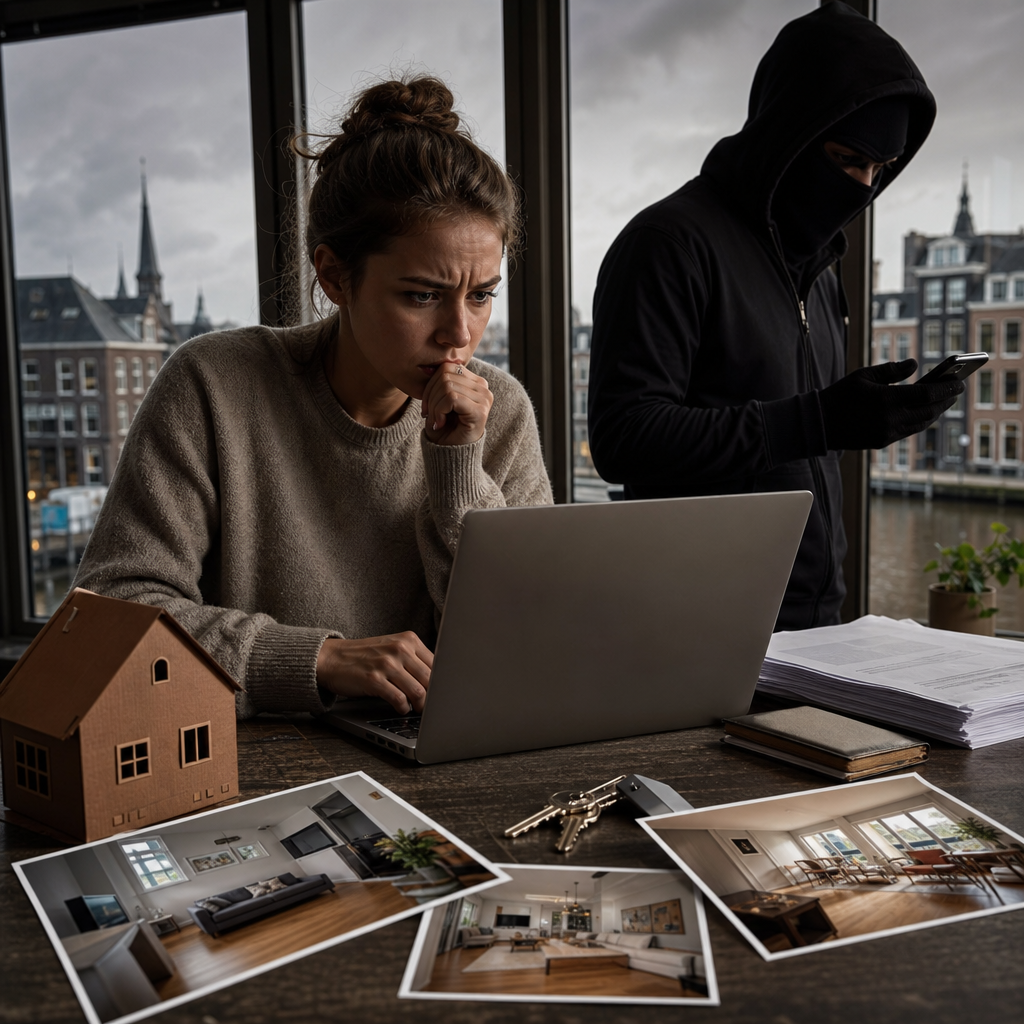
A classic rental deposit scam works like this: you're shown beautiful photos, told the owner is temporarily in another country, and asked to send one or two months' rent via international transfer to "reserve" the flat. Once the money is gone, so is the listing.
The Human Cost
Beyond the financial loss, victims often lose their moving window entirely — arriving in a new city with no home, no deposit, and no legal recourse across borders. That's why trust must be verified before any money changes hands.
Step 1: Verify the Listing Before You Verify the Person
Before you even message a landlord, audit the listing itself. To verify a rental listing, run these quick checks:
- Reverse image search the photos on Google Images or TinEye. If the same pictures appear on listings in three different cities, it's fake.
- Cross-check the address on Google Street View. Does the building match the interior photos?
- Compare the price to the neighborhood average on Idealista, Immobilienscout, Zillow, or SeLoger. A €500 flat in central Paris is not real.
- Search the exact text of the listing in quotes. Scammers reuse the same descriptions across platforms.
This five-minute audit filters out the vast majority of scams before you ever type a message.
Step 2: Verify the Landlord's Identity
Once a listing looks legitimate, it's time to confirm the human on the other end. To avoid rental fraud, insist on the following — politely but firmly.
Ask for Government-Issued ID
A real landlord has nothing to hide. Request a scanned ID or passport, and cross-reference the name with:
- The land registry (Grundbuch in Germany, Registro de la Propiedad in Spain, county records in the US)
- LinkedIn or professional profiles
- Any published tenancy contract on file
Request Proof of Ownership
Ask for a recent utility bill, property tax notice, or an extract from the land registry showing their name attached to the address. Legitimate owners can provide this within a day or two.
Do a Video Call — Inside the Apartment
This is the golden test. Ask for a live video walkthrough. Have them:
- Show the front door with the street number
- Walk through every room mentioned in the listing
- Point the camera out the window so you can identify landmarks
A scammer will refuse, delay, or send a pre-recorded clip. A real landlord will happily oblige.
Step 3: Protect Your Money
Even with a verified landlord, how you pay matters. A rental deposit scam almost always involves an irreversible payment method.
Safe practices:
- Never pay a deposit before signing a written contract
- Use bank transfers to a domestic account in the landlord's verified name
- In some markets, use escrow services (like Zelle Business, or notary-held deposits in France and Germany)
- Keep every receipt and every message
Red flags:
- Requests for Western Union, MoneyGram, crypto, or gift cards
- Payments to a third party "agent" or "lawyer" you never spoke to
- Any pressure to pay before viewing
Step 4: Use Aggregated, Traceable Sources
Here's where the fragmented nature of today's rental market becomes dangerous. Listings appear and disappear on Facebook groups within minutes. Telegram channels post 50 offers a day. Manually chasing each one leaves you exhausted — and more likely to skip safety steps.
This is exactly why Roogle was built. Roogle aggregates rental posts from Facebook, Telegram, Instagram, WhatsApp communities, Reddit, and local forums into one structured, searchable feed. Instead of scrolling through ten platforms, you see every relevant listing in one place — with a direct link back to the original source so you can verify context, poster history, and community reactions.
How Roogle Helps You Stay Safe
- Real-time alerts via Telegram, Email, and Push — you're notified the moment a listing matching your criteria appears, so you don't fall behind and rush into bad decisions
- Direct source links — you always see where the listing came from, who posted it, and when
- Access to hidden community listings — many of the safest rentals never reach big portals; they live in private groups Roogle surfaces for you
- Structured data — price, size, neighborhood, and contact info in a consistent format, making it easier to spot outliers (a suspiciously cheap flat stands out immediately)
Step 5: Trust Your Instincts
Every experienced renter will tell you the same thing: if something feels off, it usually is. A landlord who refuses a video call, a price that's 40% below market, a story about being stuck abroad — these aren't quirks, they're patterns.
Take your time. A missed apartment is inconvenient. A stolen deposit is devastating.
Conclusion: Rent Smarter, Not Faster
The 2026 rental market rewards speed, but only when paired with verification. Learning how to spot a fake rental listing, confirm a landlord's identity, and protect your deposit is no longer optional — it's a core life skill for anyone renting across Europe or the US.
Stop wasting hours refreshing scattered Facebook groups and Telegram channels. Let Roogle do the heavy lifting: aggregated listings, real-time alerts, verified sources, and full transparency. Visit roogle.app today to explore the platform, set up your first alerts, and experience a safer, smarter way to find your next home.
Looking for rentals now?
Search hidden community listings across Facebook, Telegram, Reddit, forums and more — in one live feed with instant alerts.