How to Verify a Rental Listing Is Real Before You Visit
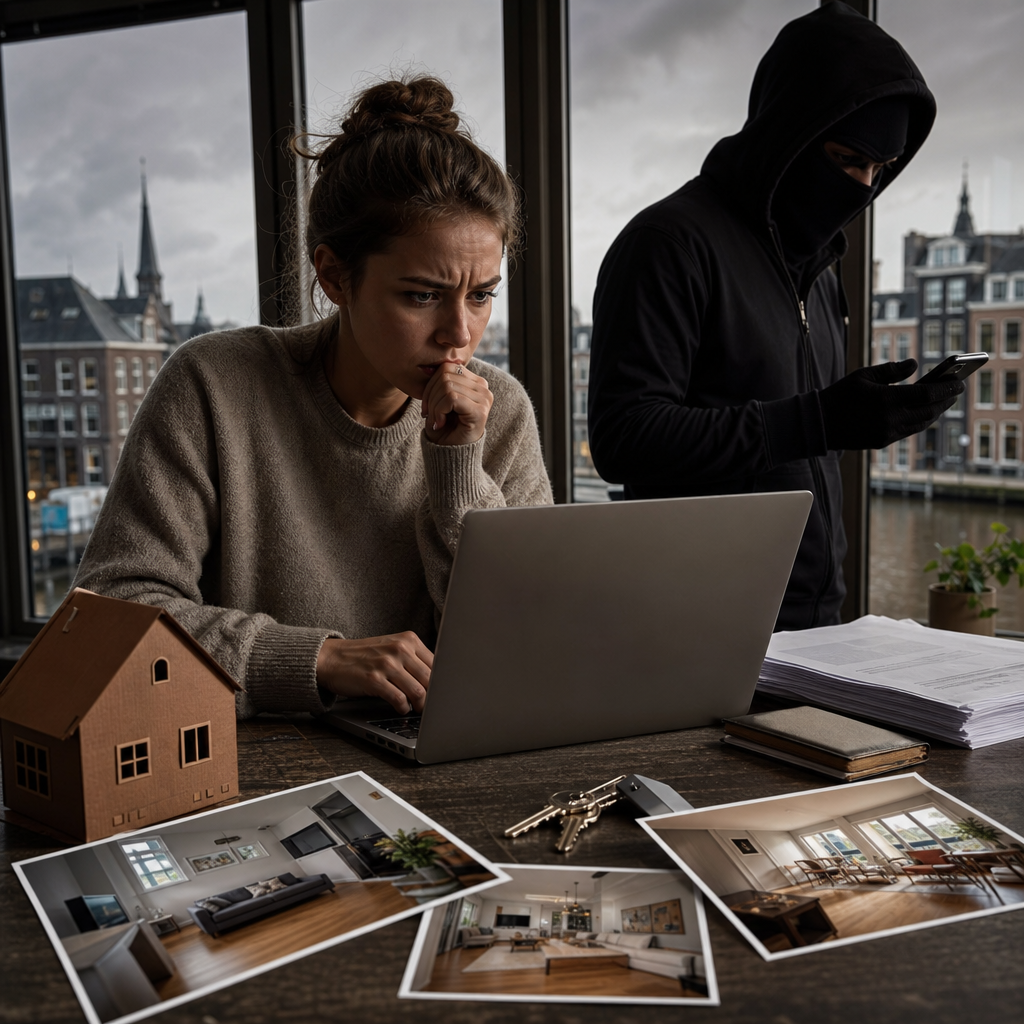
Finding a great apartment feels like winning a small lottery — especially in tight markets like Berlin, Paris, Madrid, Amsterdam, or New York. But that excitement is exactly what scammers exploit. In 2026, rental scams have become more sophisticated than ever, powered by AI-generated photos, cloned listings, and fake landlord identities pulled from social media.
Before you take a train across the city or wire a deposit to a stranger, take a few minutes to verify the listing. This guide walks you through the exact steps to confirm an offer is legitimate — and how to protect yourself from the most common rental deposit scam patterns.
Why Rental Scams Are Booming in 2026
The housing shortage across major European and US cities has created the perfect environment for fraud. When demand vastly outstrips supply, tenants act fast — sometimes too fast. Scammers know this and design their fake rental listing campaigns to trigger urgency: unbelievable prices, beautiful photos, and a landlord who insists on a quick deposit "to hold the apartment."
Common red flags include:
- Rent that is 20–40% below market average
- Landlord "abroad" who cannot show the property in person
- Requests for money via Western Union, crypto, or gift cards
- Pressure to pay before viewing
- Generic email addresses and no verifiable identity
If even one of these appears, slow down. A real landlord will never rush you into paying without a viewing.
Step 1: Reverse-Search the Photos
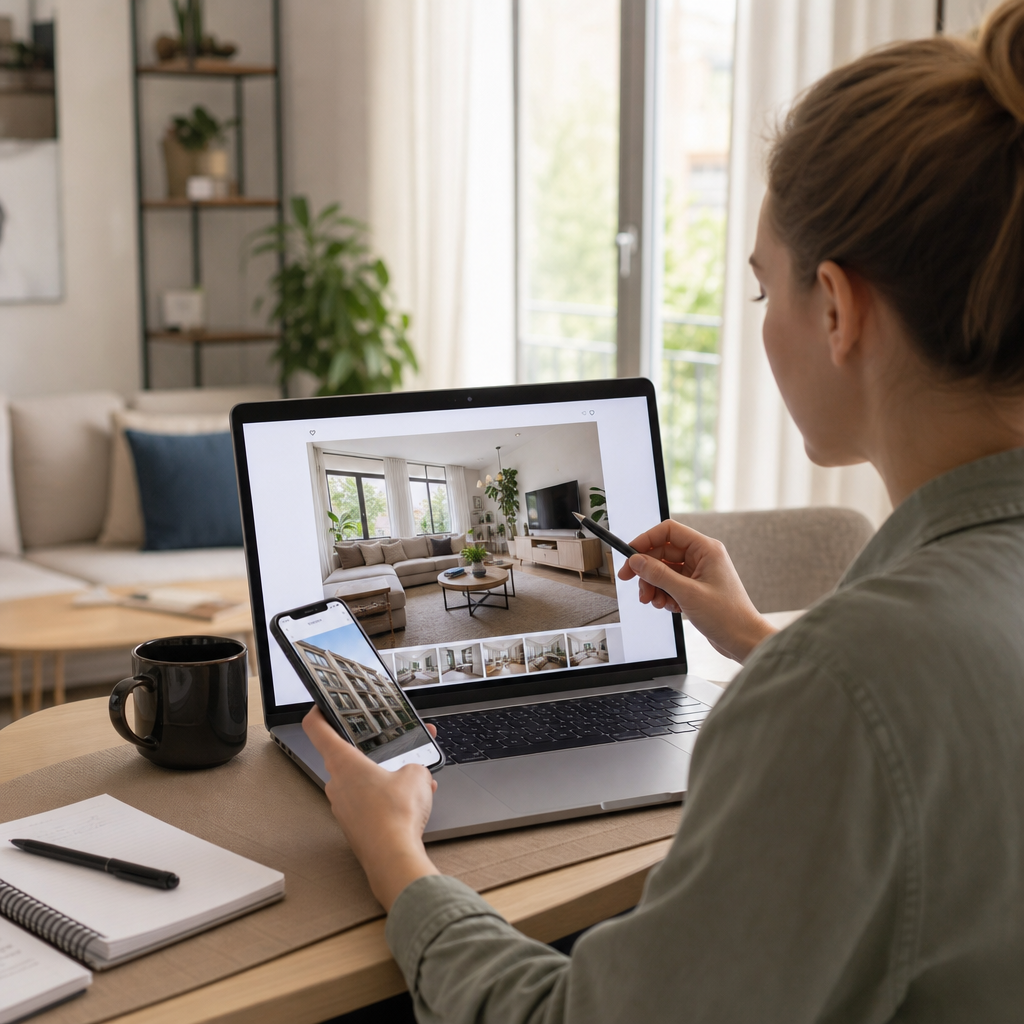
One of the fastest ways to detect a fake rental listing is a reverse image search. Save the listing photos and drop them into Google Images, TinEye, or Yandex.
What to look for:
- The same photos appearing on real estate websites in other countries
- Images that originally belonged to a hotel, Airbnb, or interior design blog
- Stock photography or AI-generated interiors (look for warped door frames, illogical shadows, or repeating patterns)
If the photos show up on a listing in Warsaw, another in Lisbon, and a third in Dublin — all under different landlord names — you're dealing with a scam.
Step 2: Verify the Address and the Building
A legitimate rental has a real address. Take the one provided and:
- Check it on Google Street View — does the building match the listing photos?
- Search the address in local property registers (Grundbuch in Germany, cadastre in France, Catastro in Spain)
- Look for the building on other rental platforms — does the same unit appear elsewhere at a very different price?
Cross-Reference the Landlord
Ask for the landlord's full name and search it on LinkedIn, local business registries, or property owner databases. In many EU countries, you can request proof of ownership before signing anything. A real owner will not be offended — a scammer will vanish.
Step 3: Trust the Source (and Its Traceability)
A huge share of scams live on unmoderated Facebook groups, Telegram channels, and WhatsApp forwards. That doesn't mean community listings are bad — many of the best deals never reach big portals — but you need to verify the source before trusting the offer.
This is exactly where Roogle changes the game. Instead of scrolling through dozens of Facebook groups, Telegram chats, Reddit threads, and Instagram accounts, Roogle aggregates real rental posts from these communities into structured, traceable listings. Every listing links back to the original source, so you can:
- See where the post was originally published
- Check the poster's account history and reputation
- Contact the landlord directly, without middlemen
- Get live alerts via Telegram, Email, or Push the moment a new listing appears
Traceability is the single most powerful anti-fraud tool a tenant has. If you can't trace a listing back to a real person on a real platform, don't trust it.
Step 4: Insist on a Real Viewing — In Person or Live Video
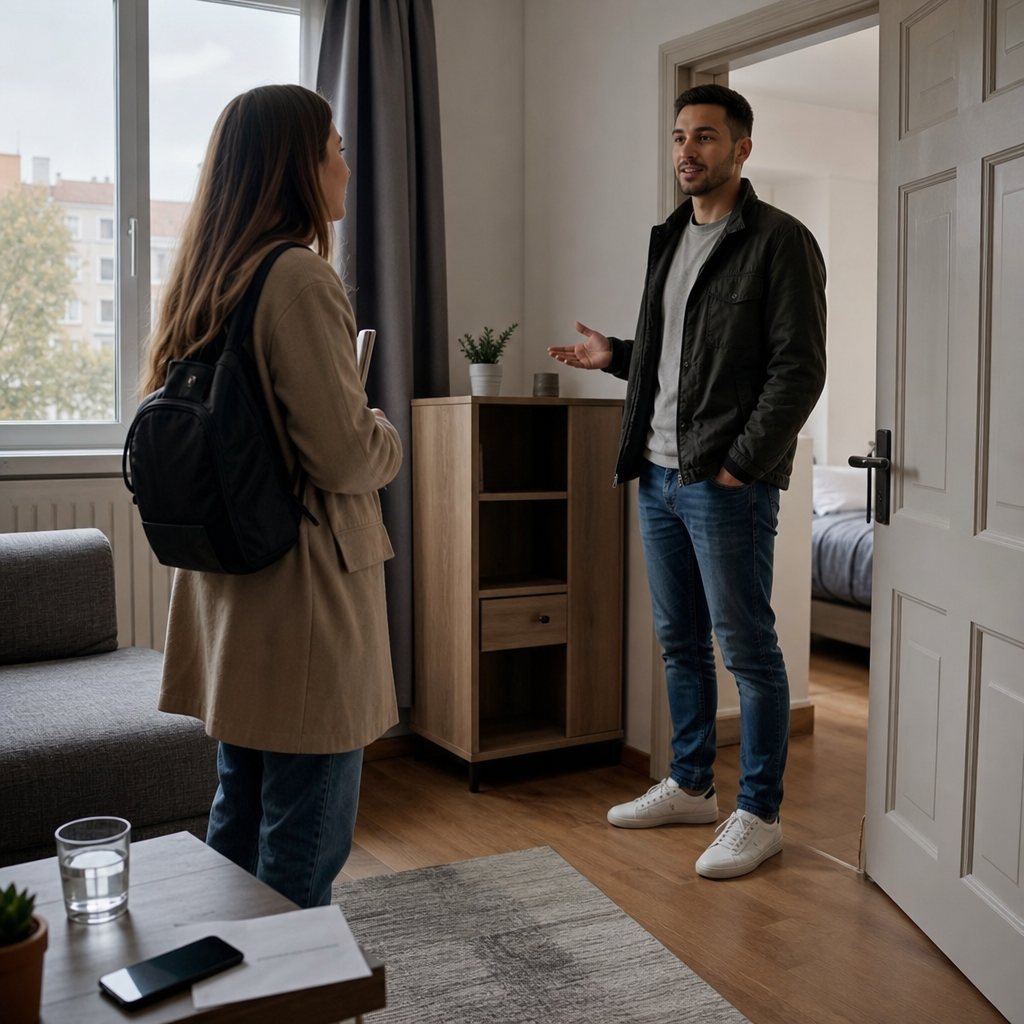
Before paying anything, you must see the apartment. If an in-person visit is impossible (for expats or international students), request a live video call, not pre-recorded footage.
During the call, ask the landlord to:
- Walk through every room in real time
- Show the view from the balcony or windows (compare with Google Maps)
- Open kitchen cabinets, the bathroom, and utility rooms
- Show today's newspaper or the current date on their phone
Scammers refuse these requests. Real landlords have no problem with them.
Step 5: Never Pay a Deposit Without a Signed Contract
The classic rental deposit scam ends the same way: you send 1–2 months' rent to "reserve" the apartment, and the landlord disappears. To avoid rental fraud, follow these rules:
- Never pay before signing a written lease
- Only use traceable bank transfers (SEPA in Europe, ACH in the US)
- Avoid Western Union, MoneyGram, Revolut to strangers, crypto, or gift cards
- Verify the recipient's name matches the landlord's ID and the property records
- In many countries, deposits must legally be held in a protected account — ask for proof
Mini Case Study: The €1,800 Berlin Scam
In early 2026, a student named Anna found a beautiful studio in Prenzlauer Berg on a Facebook group. The landlord claimed to be a diplomat in Brussels and asked for €1,800 deposit before viewing. Anna paused, ran a reverse image search, and found the same photos on a Portuguese Airbnb. She reported the post, saved her money, and later found a real apartment through a verified community source — one that linked directly back to the original poster.
The lesson: five extra minutes of verification can save thousands of euros.
Step 6: Use Your Local Legal Protections
Every country offers tenant protections you should know about:
- Germany: Mietvertrag must be written; deposits capped at 3 months' cold rent
- France: Bail obligatoire; caution limited by law
- Spain: Contrato de arrendamiento required; fianza deposited with the regional housing authority
- US: Requirements vary by state — always request a written lease and receipt for any payment
If a landlord refuses paperwork, that alone is a scam signal.
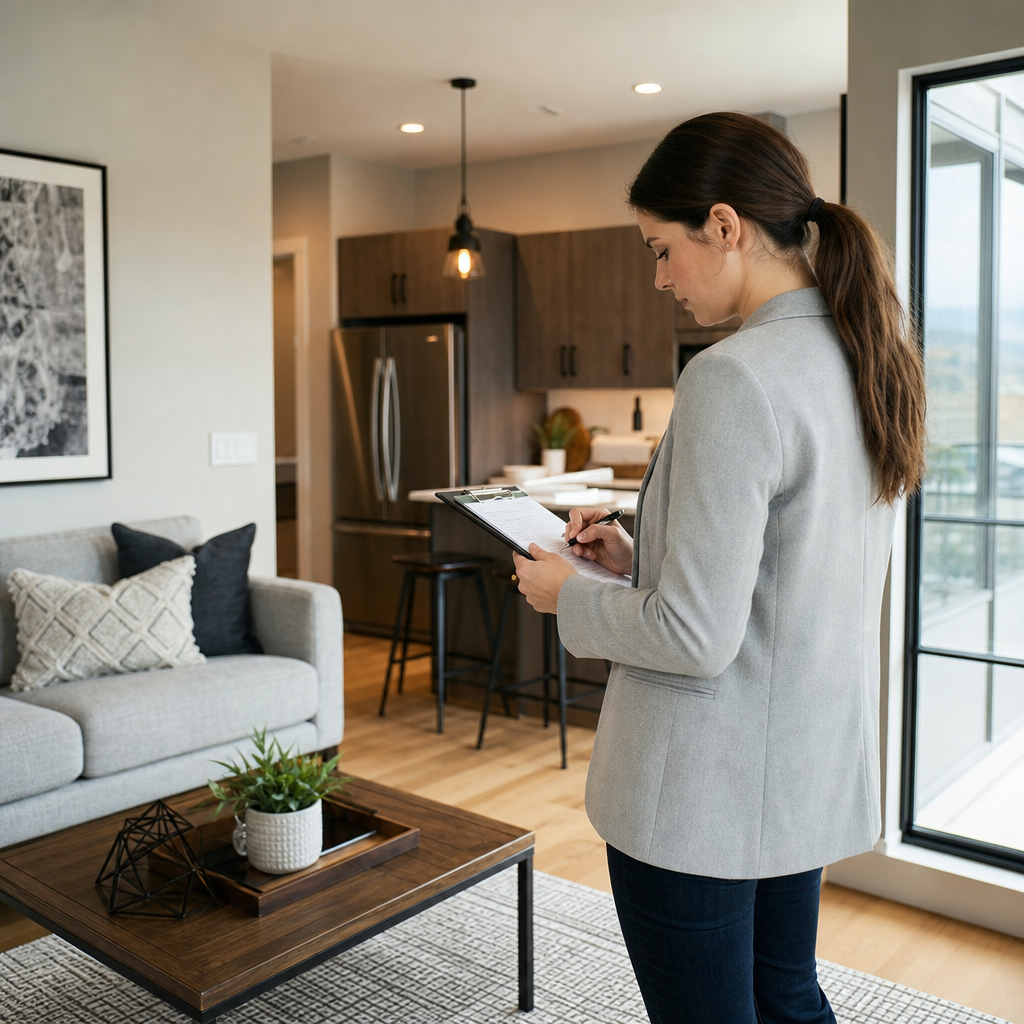
Final Checklist Before You Visit
Before you commit any time or money, tick every box:
- Photos pass reverse image search
- Address verified on Street View and property registers
- Landlord identity confirmed
- Listing source is traceable to a real account
- Live viewing (in person or video) completed
- Written contract offered before any payment
- Payment method is a traceable bank transfer
Rent Smarter, Not Riskier
Rental scams thrive in chaos — scattered posts, urgent deadlines, and untraceable landlords. The best defense is a structured, transparent search process.
That's why thousands of tenants across Europe and the US now use Roogle to find their next home. Roogle turns messy Facebook, Telegram, Instagram, WhatsApp, Reddit, and forum posts into clean, verifiable listings — with real-time alerts and direct links to the original source. You spend less time scrolling, less time doubting, and more time actually finding the right place.
Ready to search safely? Visit roogle.app, set up your alerts, and access hidden community listings the moment they appear — without the scam risk.
Looking for rentals now?
Search hidden community listings across Facebook, Telegram, Reddit, forums and more — in one live feed with instant alerts.