Moving to the Netherlands: A Housing Timeline for Your First 90 Days
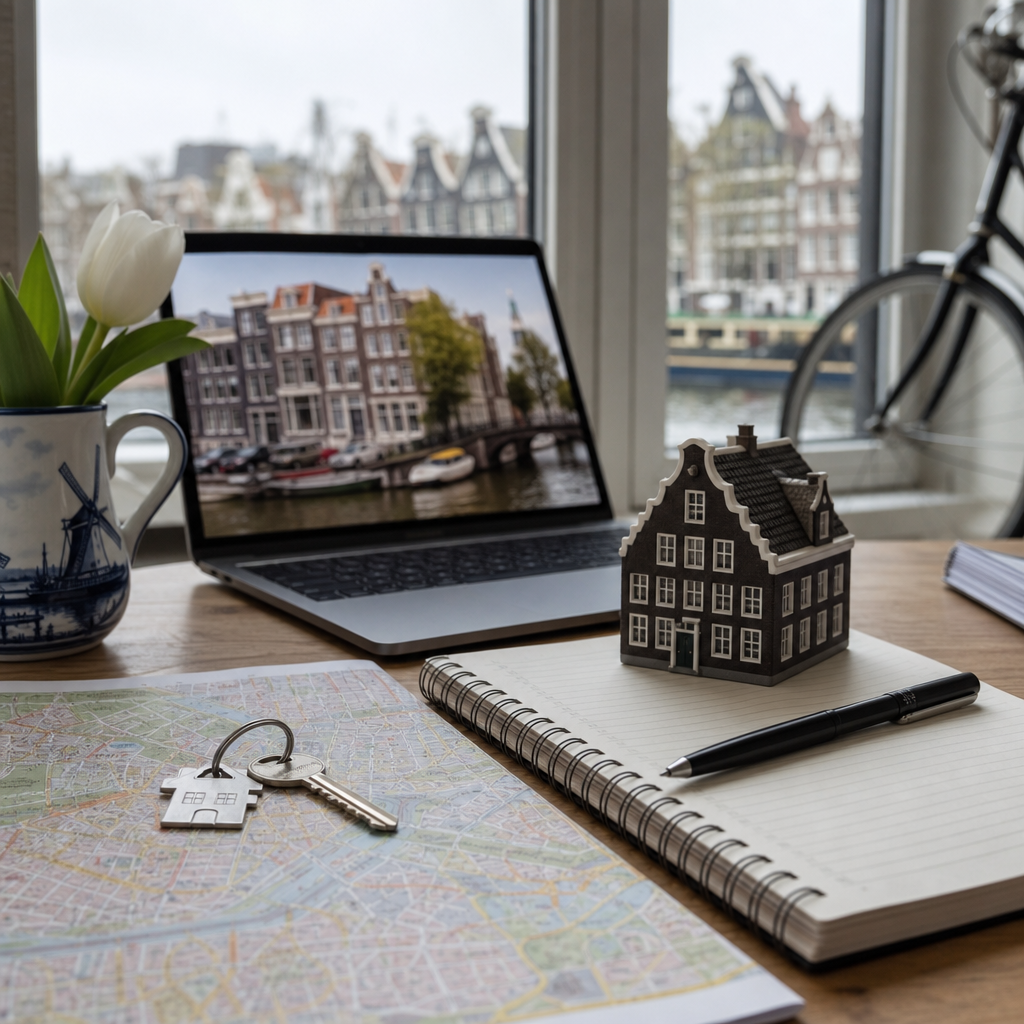
Relocating to a new country is rarely just about packing boxes. When you are moving to the Netherlands, housing quickly becomes the single most important variable in your first three months. Everything else — your BSN number, your bank account, your employment contract, even your health insurance — depends on having a confirmed address. And yet the Dutch rental market, especially in Amsterdam, Utrecht, Rotterdam and Eindhoven, is one of the tightest in Europe.
This guide gives you a clear, week-by-week housing timeline for your first 90 days. Whether you are an expat moving to the Netherlands for a new job, an international student starting the academic year, or a family relocating for a long-term project, the plan below will help you avoid the most common pitfalls. And if you want to compress the search itself into minutes instead of hours, you can start directly on roogle.app, where scattered listings from Facebook groups, Telegram channels and community forums are turned into one clean feed.
Moving to the Netherlands: Why Housing Comes Before Everything Else
In many countries, you can arrive first and sort out the paperwork later. In the Netherlands, the sequence works differently. Almost every administrative step in your first weeks in the Netherlands is tied to a physical address. If your address is not stable, your integration slows down dramatically.
This is why relocating to the Netherlands should always start with a housing strategy, not with a moving date. Before your flight is booked, you should already know:
- Which city or neighbourhood you are targeting
- Your realistic monthly budget (including utilities and city tax)
- Whether you need furnished or unfurnished
- How long your short-stay bridge will be
- Which platforms and channels you will monitor daily
BSN, Bank Account and Registration All Depend on an Address
The Dutch system is built around the BSN (Burgerservicenummer). Without a BSN, you cannot officially start a job, open most bank accounts, or sign up for health insurance. And to get a BSN, you must register at your municipality (gemeente) — which requires a valid registration address.
Mini use-case: Ana, a data engineer moving to Amsterdam, arrived with a two-week Airbnb booking, expecting to find a flat quickly. Six weeks later she was still in temporary housing, unable to register, unable to open a proper bank account, and paying premium short-stay rates. Her mistake was not the delay itself — it was starting the search after arrival instead of before.
The lesson is simple: for anyone moving to the Netherlands, housing is not an item on a checklist. It is the checklist.
Days 1–30: Short-Stay, Searching and Setting Up Alerts
The first month is about buying yourself time and building a search system that works while you sleep. You do not need to sign a long-term lease in week one — in fact, rushing usually leads to overpaying or ending up in a scam. Instead, structure the first 30 days around three parallel tracks: temporary accommodation, active search, and automated alerts.
Week 1: Land softly. Book a short-stay for 3–6 weeks. Look at aparthotels, serviced apartments, sublets and community-shared rooms. A lot of these opportunities never appear on the big portals — they circulate inside expat Facebook groups, Telegram channels and neighbourhood WhatsApp chats. You can browse many of these directly through community listings on Roogle, which pulls posts from those closed circles into one searchable feed.
Week 2: Define your real search profile. Now that you have seen the city with your own eyes, refine your filters:
- Maximum rent (including or excluding utilities — this matters a lot in the Netherlands)
- Minimum square meters
- Neighbourhoods you actually enjoyed visiting
- Registration allowed (inschrijving mogelijk) — non-negotiable if you need a BSN
- Pets, bike storage, furnished vs. unfurnished
Week 3: Turn on real-time alerts. This is where most newcomers lose the game. In Amsterdam or Utrecht, a good listing at market price can disappear within 20 minutes. Refreshing pages manually is not a strategy. Instead, set up live alerts via Telegram, email or push notifications so that new posts reach you within seconds — including the ones buried inside community groups.
Week 4: First contact wave. Start reaching out to landlords and current tenants. Prepare a short, polite intro message in English (Dutch is a bonus, not a requirement) with:
- Your name and profession
- Move-in date
- Contract length you are looking for
- Confirmation that you can provide proof of income or a work contract
Days 31–60: Viewings, Applications and the First Contract
By day 31 you should be in active viewing mode. In the current Dutch market, expect to attend several viewings before securing something — and expect competition, especially in Amsterdam and Utrecht. Here is how to stay ahead.
Prepare your document pack in advance. Dutch landlords and agencies typically ask for:
- Copy of passport or ID
- Employment contract or offer letter
- Last three payslips (or a guarantor if you have just arrived)
- Bank statements
- Sometimes a short motivation letter
Having this ready in a single PDF folder means you can apply within minutes of a viewing — often the deciding factor.
Recognise red flags. If a landlord asks for a deposit before a viewing, refuses a video call, or pushes you to pay via untraceable methods, walk away. Scams are the number-one risk for anyone moving to Amsterdam housing on a tight timeline.
Understand the contract types. In the Netherlands you will typically encounter:
- Indefinite contracts (onbepaalde tijd) — the most protective
- Fixed-term contracts (bepaalde tijd), often 12 or 24 months
- Short-stay contracts, which usually do not allow registration
Before signing, verify that the contract permits inschrijving at the municipality. Without it, you cannot legally register — and the whole 90-day plan collapses.
Days 61–90: Registration, Utilities and Settling In
Once you have keys, the third month is about turning your address into a functioning life. This is the phase most moving to Netherlands checklist articles underestimate, but it makes the difference between 'surviving' and 'settled'.
Register at the gemeente. Book your appointment as soon as your contract start date is confirmed — slots can be 2–4 weeks out in bigger cities. Bring your rental contract, passport, and, if applicable, a legalised birth certificate. Your BSN typically follows within a few days.
Set up utilities and internet. Even if your rental is 'inclusive', double-check what that actually covers. Common providers offer combined electricity + gas contracts, and internet can usually be installed within 1–2 weeks. Do not forget:
- Municipal taxes (gemeentelijke belastingen)
- Water board tax (waterschapsbelasting)
- Waste collection fee in some cities
Switch to a Dutch bank account. With your BSN in hand, opening an account at ING, ABN AMRO, Rabobank or Bunq becomes straightforward. Many employers strongly prefer paying salary into a Dutch IBAN.
Health insurance is mandatory. You have four months from registration to arrange basic health insurance (basisverzekering). Do not delay — fines apply, and premiums are backdated.
Build your local rhythm. Buy a second-hand bike, get an OV-chipkaart (or its digital successor), find your closest supermarket, and — importantly — meet neighbours. The Dutch culture of directness makes integration surprisingly fast once you engage.
A Single Search Setup for the Whole Netherlands Move
One mistake many newcomers make is to treat each city as a separate search. But if your job or study allows some flexibility, you may find a much better deal 15 minutes by train from your target city. Haarlem instead of Amsterdam. Delft or Schiedam instead of Rotterdam. Zeist or Nieuwegein instead of Utrecht.
That is why it helps to run a single national search that captures every relevant source at once. Instead of monitoring five Facebook groups, three Telegram channels and two portals per city, you can follow one unified Netherlands country feed on Roogle, filter by budget, radius and registration-friendly listings, and let live alerts do the rest. Each result links back to the original post, so you always contact the landlord or advertiser directly — no middlemen, no hidden fees.
This single-setup approach is especially valuable for an expat moving to Netherlands with a hard start date. The fewer tabs you juggle, the faster you convert your first viewing into your first contract.
Your 90-Day Checklist at a Glance
To close the loop, here is the compressed version of the timeline:
- Days 1–7: Book short-stay; set city, budget and non-negotiables
- Days 8–14: Refine filters; scout neighbourhoods on foot and by bike
- Days 15–21: Activate live alerts across portals and community sources
- Days 22–30: Send first applications; prepare document pack
- Days 31–45: Attend viewings; verify contracts allow registration
- Days 46–60: Sign lease; pay deposit only via traceable methods
- Days 61–75: Register at gemeente; receive BSN; open Dutch bank account
- Days 76–90: Set up utilities, insurance, transport card; start settling in
Moving to the Netherlands housing does not have to be chaotic. With a clear 90-day plan, the right document pack and a smart search system, your first weeks in the Netherlands can be surprisingly smooth — even in the current tight market.
Ready to Simplify Your Move?
Instead of scrolling through dozens of Facebook groups, Telegram channels and portals every hour, let one platform do the heavy lifting. Visit roogle.app to explore live listings from across the Dutch market, set up instant alerts on Telegram, email or push, and access community offers that never make it to the big portals. Your next home in the Netherlands might already be posted — the question is only whether you see it first.
Looking for rentals now?
Search hidden community listings across Facebook, Telegram, Reddit, forums and more — in one live feed with instant alerts.