The Paperwork You Need to Rent as a Foreigner in the Netherlands
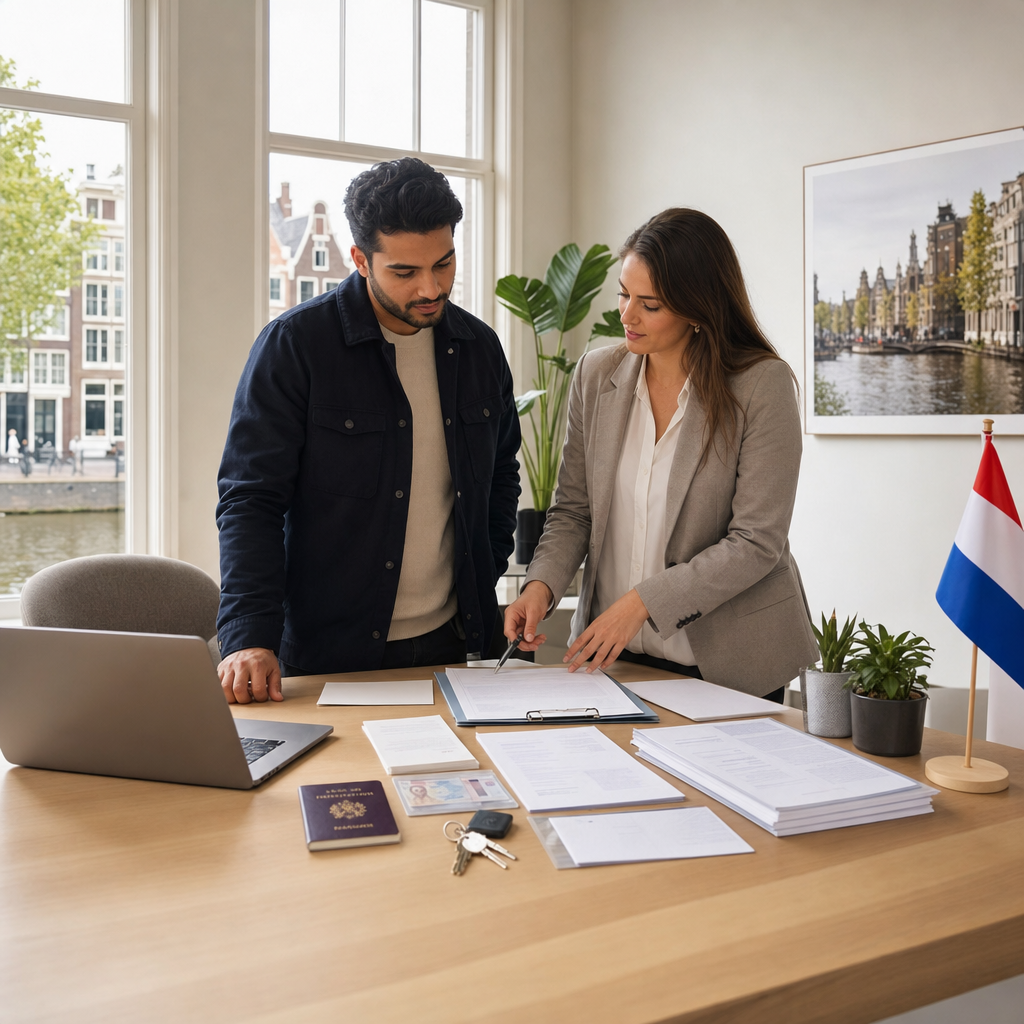
Renting a home in the Netherlands as a foreigner can feel like navigating a maze of Dutch acronyms, notarized documents, and last-minute landlord requests. In 2026, with Amsterdam, Rotterdam, Utrecht, and Eindhoven still ranking among Europe's most competitive rental markets, being paperwork-ready is no longer optional — it's the single biggest factor separating those who sign a lease within two weeks from those who spend three frustrating months in temporary Airbnbs.
This guide walks you through every document you'll need for a successful expat relocation to the Netherlands, explains the peculiarities of the Dutch rental system, and shows you how to combine solid preparation with smart tools like Roogle to land your home faster.
Why the Dutch Rental Market Demands So Much Paperwork
The Netherlands operates one of the most regulated housing markets in Europe. Landlords — whether private owners or large agencies like Bouwinvest, Vesteda, or Pararius partners — are legally obligated to verify tenant identity, income, and residency status. Add the ongoing housing shortage (with roughly 400,000 units still missing nationally in 2026), and you get a market where landlords can afford to demand a complete dossier before even scheduling a viewing.
For anyone moving to the Netherlands, understanding this upfront saves weeks of back-and-forth. Landlords typically shortlist candidates within 24 hours of listing a property, and the applicant with the most complete file almost always wins.
The Two-Speed Market: Social vs. Private Rentals
- Social housing (sociale huurwoning): Below €879/month (2026 cap), allocated via municipal waiting lists — often 8 to 15 years in Amsterdam. Rarely accessible to newly arrived expats.
- Private rentals (vrije sector): Above €879/month, market-driven, and where 95% of expat housing the Netherlands transactions happen.
The Core Documents Every Foreign Tenant Needs
Whether you're a student in Groningen, a knowledge migrant in Eindhoven, or a remote worker in Haarlem, the following documents form the non-negotiable baseline.
1. Valid Passport or EU/EEA ID Card
A clear color scan of your passport's photo page is the first thing every landlord requests. Non-EU citizens should also prepare their residence permit (verblijfsvergunning) or, if newly arrived, the MVV entry visa and IND appointment confirmation.
2. BSN (Burgerservicenummer)
Your Dutch social security number, issued after registering at the local municipality (gemeente). Without a BSN, you cannot open a Dutch bank account, sign most utility contracts, or complete a proper lease. If you haven't received it yet, mention your registration appointment date — many landlords accept this as a temporary substitute.
3. Proof of Income
Dutch landlords typically require your gross monthly income to be 3 to 4 times the rent. Prepare:
- Your signed employment contract (arbeidsovereenkomst)
- The last three payslips (loonstroken)
- An employer statement (werkgeversverklaring) — a standardized Dutch form
- For freelancers/ZZP: last two years of tax returns and a recent accountant statement
4. Bank Statements
Usually the last three months, showing consistent income deposits. International statements are accepted, though ING, ABN AMRO, and Bunq statements strengthen your file considerably.
5. Reference Letter from Previous Landlord
Optional but powerful. A brief letter confirming you paid rent on time and left the property in good condition can tip the balance in a market where 40+ candidates apply for a single Utrecht apartment.
Special Cases: Students, Knowledge Migrants, and Digital Nomads
For International Students
DUO enrollment letters, university acceptance confirmations, and proof of scholarship or student loan are standard. Since students rarely meet the 3x-rent income rule, expect landlords to ask for a guarantor — usually a parent providing their own income proof and passport copy.
For Knowledge Migrants (kennismigranten)
If you're relocating to the Netherlands under the highly skilled migrant scheme, your IND-recognized sponsor letter and 30% ruling application (if applicable) act as gold-standard credentials. Many landlords in the Randstad specifically favor these applicants.
For Remote Workers and Freelancers
This is where things get tricky. Without a Dutch employment contract, you'll need heavier documentation: 6+ months of bank statements, client contracts, and often a larger deposit (up to three months instead of the standard one to two).
Can You Rent Without a Guarantor?
The short answer: yes, but it requires strategy. Learning how to rent without a guarantor in the Netherlands typically involves one of three routes:
- Prepaying rent: Offering 3 to 6 months upfront (legal, common among international tenants).
- Providing a larger deposit: Some private landlords accept two to three months' deposit in lieu of a guarantor — though the legal maximum is technically two months.
- Using a rental guarantee service: Companies like Housing Anywhere Verified or SecureRent act as institutional guarantors for a fee (typically 5-8% of annual rent).
The Hidden Challenge: Finding the Listing Before Everyone Else
Having perfect paperwork is useless if you never see the listing in time. In 2026, over 60% of private rentals in the Netherlands are shared first on Facebook groups, WhatsApp broadcasts, Telegram channels, and expat Reddit threads — not on Funda or Pararius. By the time a listing hits mainstream portals, dozens of applications are already in.
This is exactly where Roogle transforms your search. Roogle aggregates rental posts from scattered community sources — Facebook expat groups, Telegram Amsterdam housing channels, Instagram broker stories, WhatsApp networks — and structures them into a single searchable feed with real-time alerts via Telegram, Email, or push notifications.
A Real Use Case
Maria, a Portuguese software engineer relocating to Eindhoven in March 2026, set up a Roogle alert for two-bedroom apartments under €1,800. Within 18 hours, she received a Telegram push for a listing shared in a private Facebook group — with a direct link to the original post. She contacted the landlord within four minutes, submitted her prepared dossier (passport, employer statement, three payslips, bank statements), and signed the lease two days later. Total search time: under 72 hours.
Preparing Your Digital Dossier in Advance
Before you even start scrolling listings, create a single PDF folder containing:
- Passport / residence permit scan
- BSN document or municipal registration proof
- Employment contract
- Last three payslips
- Werkgeversverklaring (employer statement)
- Last three bank statements
- Reference letter from previous landlord (if available)
- A short personal introduction letter (one paragraph explaining who you are and why you're moving)
Name the file professionally (e.g., Rental_Application_YourName_2026.pdf) and keep it ready to send within minutes of spotting a listing.
Final Thoughts: Speed + Preparation = Success
Renting in the Netherlands as an expat in 2026 rewards two things above all: preparation and speed. Your paperwork must be flawless, but even the perfect dossier is useless if the property is already gone. Combining a well-organized digital file with a tool that alerts you to new listings the moment they appear — across every hidden community channel — is the winning formula.
Don't waste weeks refreshing Funda or scrolling through 40 different Facebook groups. Let Roogle do the heavy lifting.
Visit roogle.app today, set up your custom alerts for Amsterdam, Rotterdam, Utrecht, The Hague, or any Dutch city, and turn scattered community listings into your next home — before anyone else even sees them.
Looking for rentals now?
Search hidden community listings across Facebook, Telegram, Reddit, forums and more — in one live feed with instant alerts.