The Paperwork You Need to Rent as a Foreigner in Switzerland
Switzerland remains one of the most competitive rental markets in Europe, and for newcomers, the paperwork alone can feel like a second full-time job. Between residence permits, salary certificates, debt extracts and reference letters, landlords in Zurich, Geneva, Lausanne and Basel routinely receive dozens of applications for a single flat — and they choose the most complete file, not the fastest one.
If you are planning your expat relocation to Switzerland in 2026, this guide walks you through every document you should prepare before you even start viewing apartments, plus practical tips on how to stand out when your Swiss credit history is still a blank page.
Why Swiss Landlords Ask for So Much Paperwork
Swiss tenancy law is strict, evictions are slow, and rental deposits are capped at three months. To reduce risk, landlords and property management companies (Verwaltungen / régies) require applicants to prove — on paper — that they can pay the rent for years to come.
For foreigners moving to Switzerland, this creates a paradox: you need Swiss documents to rent, but you often need an address to get those documents. Understanding the logic behind each requirement helps you prepare workarounds in advance.
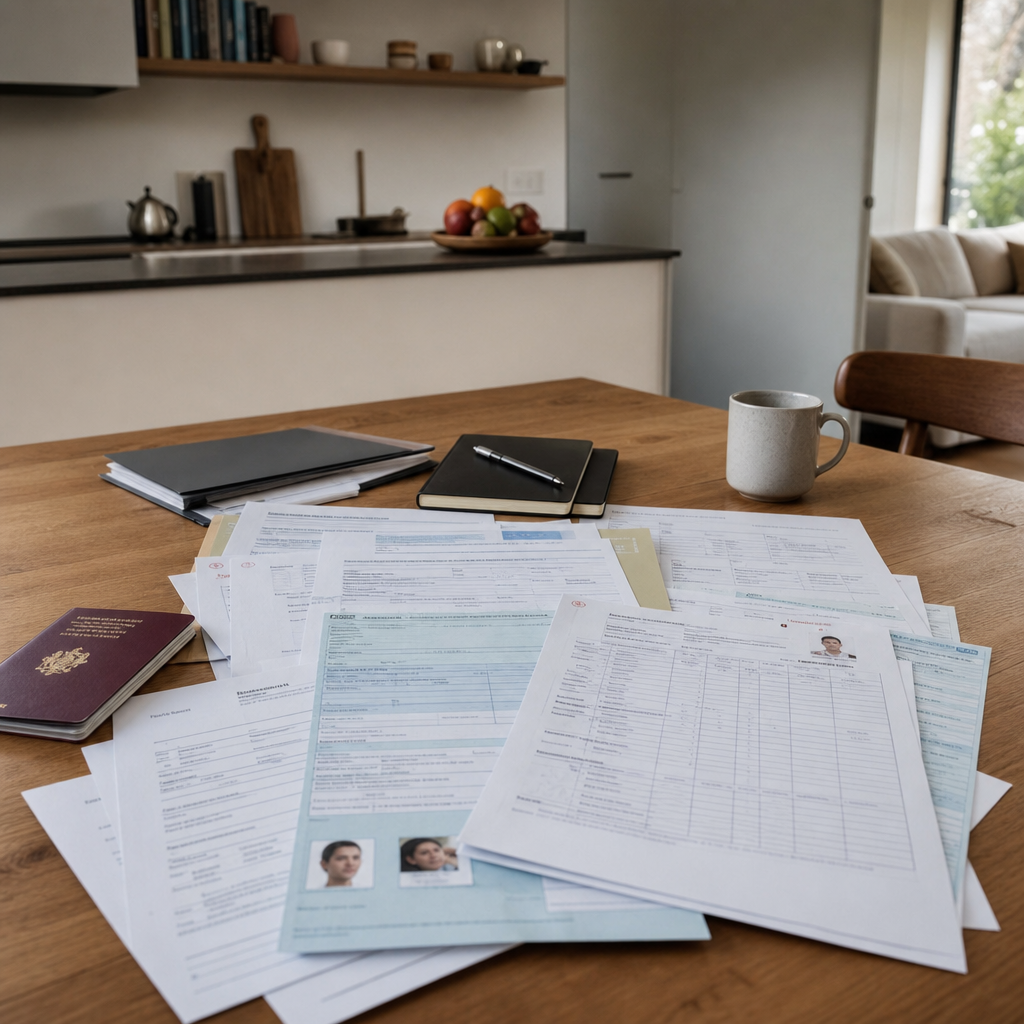
The typical application dossier includes:
- A completed rental application form (Anmeldeformular / formulaire d'inscription)
- Copy of passport and residence permit (or work contract if the permit is pending)
- Last 3 salary slips or an employer confirmation letter
- A debt collection extract (Betreibungsauszug / extrait de l'Office des poursuites)
- Proof of liability insurance (Privathaftpflichtversicherung)
- Reference from your previous landlord (if available)
Residence Permits: The Foundation of Any Application
Before anything else, landlords want to know your legal status. Your permit determines how long you can stay, whether you can sign a long-term lease, and how risky you appear on paper.
The main permits you may hold
- Permit L — short-term (up to 12 months). Harder to rent with; landlords fear early departure.
- Permit B — initial residence (usually 1–5 years, renewable). The standard permit for renting in Switzerland as expat.
- Permit C — settled residence (after 5–10 years). Treated almost like Swiss nationals.
- Permit G — cross-border commuter. Usually not eligible for standard leases inside Switzerland.
If your permit is still being processed, provide your signed work contract and the cantonal migration office's confirmation of application. Many landlords accept this as a temporary substitute.
The Betreibungsauszug: Switzerland's Financial Report Card
The Betreibungsauszug (debt collection extract) is arguably the most important document in your file. It confirms you have no outstanding debts registered with any Swiss debt enforcement office.
You can order it online or in person from the Betreibungsamt of your current municipality for around CHF 17–40. It should be no older than three months.
What if you just arrived?
New arrivals obviously cannot produce a Swiss debt extract yet. In that case, prepare:
- An equivalent document from your home country (e.g., a credit report from Schufa in Germany, a casier extract in France, or a credit bureau report in the US)
- A translated and notarized version if the original is not in German, French, Italian or English
- A cover letter explaining your situation — professionalism goes a long way
Proof of Income and Employment
Swiss landlords apply a golden rule: your gross monthly rent should not exceed one third of your gross monthly income. To verify this, they require:
- Your signed Swiss employment contract with start date and salary
- The last three payslips if you have already started working
- A confirmation letter from HR stating position, salary and contract type
- For self-employed applicants: tax returns from the past two years and a business registration extract
Special cases
- Students: provide proof of scholarship, parental guarantee, or a blocked account.
- Remote workers: bring your foreign employment contract, recent bank statements, and ideally a letter from your employer confirming permission to work from Switzerland.
- Retirees: pension statements and proof of savings.
Renting Without a Guarantor or Swiss Credit History
One of the biggest hurdles when you relocate to Switzerland is the absence of a local track record. Fortunately, there are several proven strategies for rent without guarantor Switzerland situations.
Rental deposit alternatives
- Cash deposit account (Mietkautionskonto): the standard three months' rent, blocked at a Swiss bank.
- Rental deposit insurance (SwissCaution, Firstcaution, SmartCaution): instead of blocking cash, you pay an annual premium (typically 4–5% of the deposit amount). Extremely popular among expats.
- Prepayment of several months' rent: some private landlords accept 3–6 months paid in advance in lieu of a full dossier.
- Corporate guarantee: if your employer relocates you, ask HR whether the company can co-sign or guarantee the lease.
Where to Actually Find the Listings
Having perfect paperwork is useless if you never see the apartment in the first place. In cities like Zurich or Geneva, the best flats never even reach the big portals — they circulate in Facebook groups, Telegram channels, WhatsApp community chats and expat forums, and are gone within hours.
This is exactly where Roogle changes the game. Roogle aggregates rental posts scattered across Facebook, Telegram, Instagram, WhatsApp and Reddit communities, structures them into clean listings, and sends you real-time alerts the moment a matching flat is published — with a direct link back to the original post so you can contact the landlord first.
A quick example
Imagine you are an expat arriving in Lausanne in September. Instead of refreshing five Facebook groups every 20 minutes, you set filters on Roogle (2 rooms, max CHF 2,200, pet-friendly) and receive a Telegram alert at 8:47 a.m. for a flat posted at 8:45 a.m. in a private group. You message the landlord with your ready-to-go dossier — and secure a viewing before most locals have even seen the post.
Building the Perfect Dossier: A Checklist
Before you send your first application, compile a single PDF containing, in this order:
- Cover letter (1 page, personal, in the local language if possible)
- Passport + residence permit
- Employment contract and last 3 payslips
- Debt collection extract (Swiss or equivalent from your home country)
- Proof of liability insurance
- Reference letter from previous landlord
- Rental deposit insurance certificate or proof of funds
A polished, complete dossier signals reliability — and reliability is what wins keys in Switzerland.
Final Thoughts and Your Next Step
Securing expat housing Switzerland-side is challenging, but entirely doable when you arrive prepared. Understand your permit, gather your financial documents, choose the right deposit solution — and above all, be first to see the listings that matter.
Ready to skip hours of manual scrolling and receive Swiss rental opportunities the moment they go live? Visit roogle.app today, set your filters, and let live alerts on Telegram, email or push notifications bring the Swiss rental market straight to you. Your next Swiss home is one notification away.
Looking for rentals now?
Search hidden community listings across Facebook, Telegram, Reddit, forums and more — in one live feed with instant alerts.