Renting an Apartment in Amsterdam: Prices, Districts and Where Listings Appear First
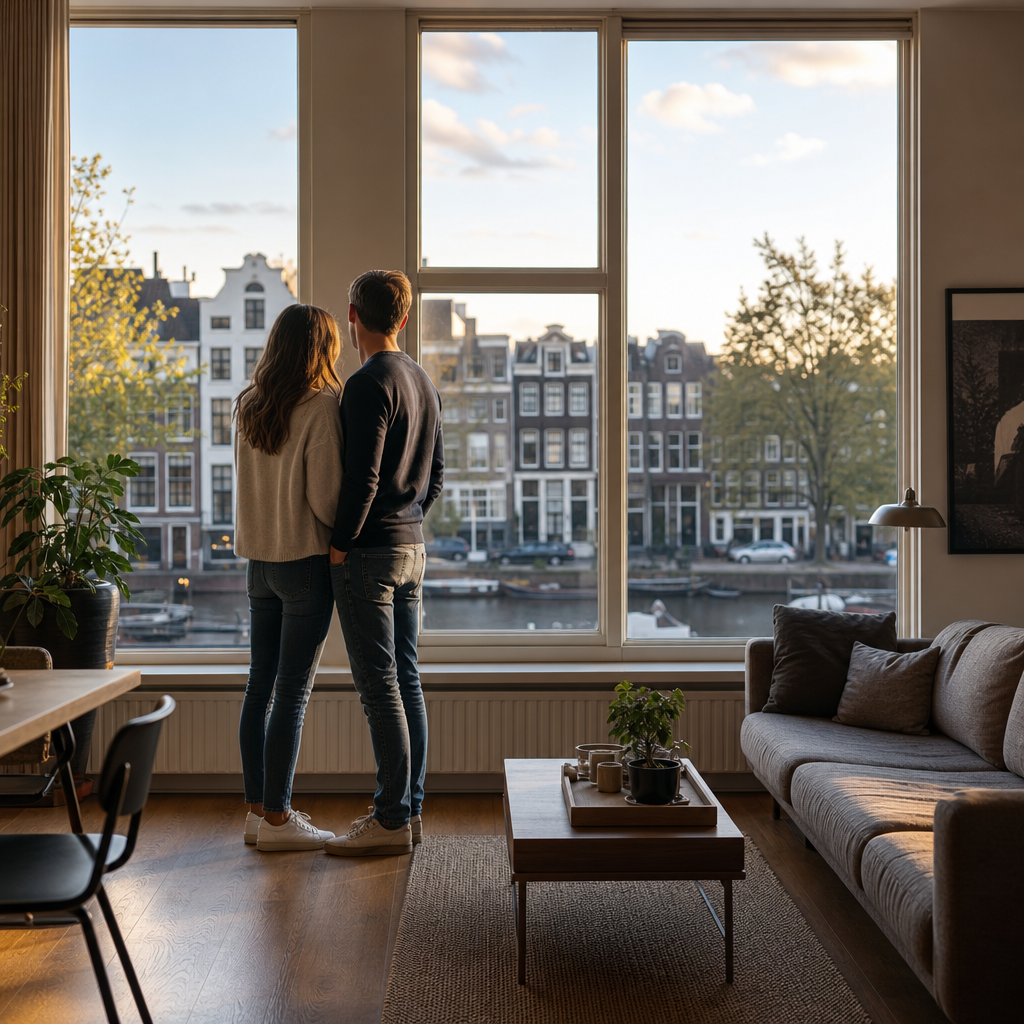
Amsterdam is one of the most competitive rental markets in Europe. Every autumn, thousands of new arrivals — international students at UvA and VU, tech workers relocating to the Zuidas, digital nomads, and returning expats — all begin the same frustrating routine: refreshing Funda, Pararius, and Kamernet, hoping for something affordable to appear before it disappears again. If you plan to rent an apartment in Amsterdam this season, you need more than luck. You need a strategy built around where listings actually appear first, how much you should realistically budget, and which neighborhoods still offer value.
This guide walks you through everything you need to know about apartments for rent in Amsterdam in 2026 — from district-by-district rent levels to the hidden channels where landlords post before the mainstream portals ever see them.
Renting an Apartment in Amsterdam: What to Expect in 2026
The Amsterdam rental market has tightened again after the introduction of expanded regulations under the Wet betaalbare huur (Affordable Rent Act). While the law was designed to cap prices in the mid-segment, one unintended consequence has been fewer available units in the free sector, as some landlords pulled properties from the market or shifted to short-term corporate leases. The result: even more demand chasing even fewer listings.
Typical response times are brutal. A well-priced two-bedroom in De Pijp can receive 60 to 100 applications in the first 24 hours. Agencies frequently close the viewing list within hours of publication. This is why renting in Amsterdam has become as much about speed and information access as about your budget or documentation.
What you should be prepared for before starting your Amsterdam apartment search:
- Proof of income equal to 3 to 4 times the monthly rent (or a Dutch guarantor)
- A recent employer statement, work contract, and passport copy
- Willingness to view within 24 to 48 hours of a listing going live
- Agency fees, though these are now legally restricted for tenants in most cases
- A registration address (BSN) if you're staying longer than four months
Rent Levels by District and Apartment Size
Prices vary dramatically depending on the neighborhood, building age, and whether the unit is furnished. Here's a realistic snapshot of what a huurwoning Amsterdam costs across the main districts as of late 2026:
- Centrum (Grachtengordel, Jordaan): Studios from €1,700; one-bedrooms €2,200–€2,900; two-bedrooms €2,800–€4,200. Charm and location come at a premium, and most units are compact.
- De Pijp and Oud-Zuid: One-bedrooms €2,100–€2,700; two-bedrooms €2,700–€3,800. Popular with young professionals, close to Vondelpark and the museum quarter.
- Oost (Indische Buurt, Watergraafsmeer): One-bedrooms €1,700–€2,300; two-bedrooms €2,300–€3,100. Increasingly trendy and better value than the center.
- Noord: Studios from €1,300; one-bedrooms €1,600–€2,100; two-bedrooms €2,000–€2,900. The best price-to-quality ratio if you're comfortable with the ferry commute.
- Nieuw-West and Zuidoost: Studios from €1,100; one-bedrooms €1,400–€1,900. Still the most affordable areas for renting in Amsterdam, well-connected by metro.
- Zuidas: Modern one-bedrooms €2,400–€3,200; two-bedrooms €3,200–€4,500. Corporate-heavy, often furnished, popular with expats at ING, Google, and law firms.
Utilities typically add €120–€220 per month, and internet another €40–€55. Furnished units command a 15–25% premium.
Where Amsterdam Rentals Are Listed: Portals, Groups and Agencies
Most newcomers start their Amsterdam apartment search on the big three: Funda, Pararius, and Kamernet. These portals are essential, but they represent only a fraction of the true supply. Here's how the ecosystem actually works:
- Funda Huur — dominant for agency-listed apartments, but many units are already reserved via internal networks before publication.
- Pararius — a broad aggregator for professional landlords, strong on mid- to high-segment flats to rent in Amsterdam.
- Kamernet — the go-to for rooms and studios, often used by younger tenants and students.
- HuurWoningen.nl — good coverage of housing corporations and mid-market apartments.
- Local agencies (VBO / NVM members) — many small Amsterdam brokers post first on their own websites and only later syndicate.
Beyond the portals, an enormous parallel market operates through community channels. Facebook groups such as Amsterdam Housing, Apartments in Amsterdam, and Expats in Amsterdam Housing generate hundreds of new posts weekly. WhatsApp broker groups, Telegram channels for expats, and even Reddit's r/Amsterdam and r/Netherlands often surface listings that never make it to funda.nl. If you want direct access to that stream, browsing the Netherlands country feed on Roogle is the fastest way to see everything in one place, updated in real time.
The Amsterdam Listings That Never Reach Funda
A significant share of Amsterdam rentals — some estimates put it above 30% — never appears on Funda or Pararius at all. Why? Several reasons converge:
- Private landlords who own one or two apartments prefer to avoid agency fees and portal subscription costs. They post directly in expat Facebook groups or WhatsApp networks.
- Word-of-mouth relets happen when a departing tenant recommends a replacement to the landlord, especially in shared houses and student flats.
- International-friendly landlords often post exclusively in English-language expat communities, knowing they'll receive qualified tenants quickly.
- Short-notice listings — sublets, diplomatic rentals, sabbatical swaps — move too fast for traditional portals and appear only on social platforms.
This is exactly the gap that community aggregation was built to close. By continuously scanning Facebook groups, Telegram channels, WhatsApp broker feeds, Instagram accounts, and forums, tools like Roogle collect these hidden posts and structure them into searchable listings. You can browse the Facebook-sourced listings feed to get a sense of just how much inventory exists outside the mainstream portals — most of it disappearing within a day.
Applying for an Amsterdam Apartment: Speed Beats Everything
In Amsterdam, being first often matters more than being the strongest candidate on paper. A landlord receiving 80 messages within 12 hours will usually schedule viewings with the first 5 to 10 qualified applicants and never contact the rest. Here's how to give yourself a real chance:
- Have your application pack ready as a single PDF. Include ID, work contract, last three payslips, employer letter, and a short introduction with references.
- Reply within minutes, not hours. Set up push notifications on your phone for any source you use.
- Personalize the first message. A three-line note explaining who you are, when you can view, and confirming your income beats a generic template.
- Be flexible with viewing times. Landlords remember tenants who make it easy.
- Never pay a deposit before viewing. This is the single most common scam vector in the Amsterdam rentals market.
Speed also means knowing where a listing originates. A Roogle notification links you directly to the original Facebook post, Telegram message, or agency page, so you can contact the landlord in one click rather than searching through five platforms.
One Feed for Every Apartment for Rent in Amsterdam
The most exhausting part of renting in Amsterdam isn't the prices or the paperwork — it's the fragmentation. Serious searchers end up monitoring Funda, Pararius, Kamernet, six Facebook groups, three Telegram channels, and a WhatsApp broker list, all simultaneously. Most people burn out within two weeks.
A unified feed changes the equation completely. Instead of switching tabs and scrolling, you receive a single stream of new Amsterdam apartments matching your filters — price range, district, number of bedrooms, furnished or not — with instant alerts by Telegram, email, or push notification the moment a listing appears anywhere across the monitored ecosystem. Every alert links back to the original source, so you communicate directly with the landlord or agent, with no middleman.
This is what Roogle does specifically for Amsterdam: it turns dozens of scattered channels into one clean, structured, real-time feed, so you spend your time viewing apartments instead of hunting for them.
Start Your Amsterdam Apartment Search the Smart Way
Amsterdam will always be a demanding rental market, but it doesn't have to consume your evenings and weekends. Understand the price ranges by district, keep your application documents ready, react within minutes, and — most importantly — get access to listings before your competition does.
Ready to stop refreshing Funda every ten minutes? Set up your Amsterdam search on Roogle, define your budget and preferred districts, and let real-time alerts bring apartments straight to you. The next great flat to rent in Amsterdam is probably being posted somewhere right now — make sure you're the first to see it.
Looking for rentals now?
Search hidden community listings across Facebook, Telegram, Reddit, forums and more — in one live feed with instant alerts.