Too-Good-To-Be-True Rent Prices: The Psychology Behind Rental Scams

In July 2026, a young nurse relocating to Berlin transferred €1,800 to a landlord she never met — for an apartment that never existed. In Barcelona, a Master's student lost his entire summer savings to a charming "owner" who claimed to be stuck abroad. These stories repeat every day across Europe and the US, and they almost always share one detail: the price was just a little too good to walk away from.
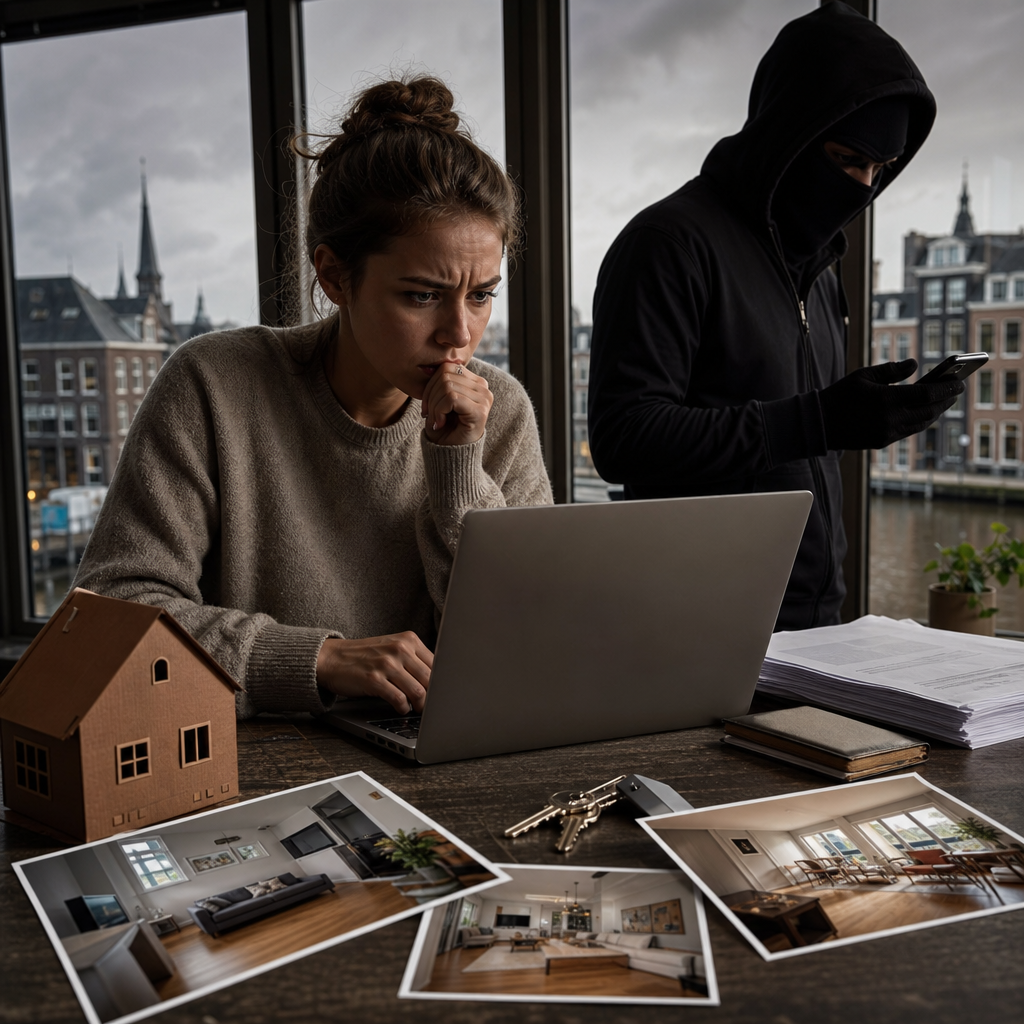
A rental scam rarely succeeds because the victim is naive. It succeeds because fraudsters have mastered the psychology of urgency, trust, and hope. Understanding how they think is the first — and most powerful — step in learning how to avoid rental fraud.
Why Our Brains Fall for a Fake Rental Listing
Housing is emotional. When you're searching for a home, you're not just comparing square meters — you're imagining your life in a new city, a new job, a new chapter. Scammers know this. They engineer their offers to hit the exact cognitive shortcuts your brain uses when it's tired, stressed, and running out of time.
Three biases do most of the damage:
- Scarcity bias: "Three other people are interested — decide today."
- Anchoring: A €650 studio in central Amsterdam feels like a miracle after you've seen fifty listings at €1,400.
- Reciprocity: The "landlord" sends you a warm message, family photos, even a copy of their passport. You feel obliged to trust them back.
The Dopamine Trap of the Bargain
Neuroscience research consistently shows that finding an unusually cheap deal releases dopamine before rational analysis kicks in. By the time your prefrontal cortex asks "Wait — why is this so cheap?", your fingers have already typed a reply saying "I'm very interested, when can I visit?"
The 6 Classic Scripts of a Rental Deposit Scam
After analyzing thousands of flagged posts across Facebook groups, Telegram channels, WhatsApp broadcasts, and Reddit threads, patterns emerge. Almost every rental deposit scam falls into one of these scripts:
- The Absent Owner: "I'm working in Dubai/Norway/on an oil rig. I'll send the keys via DHL once you pay the deposit."
- The Airbnb Hijack: Real photos stolen from a legitimate short-term rental, reposted as a long-term lease at half the price.
- The Fake Agency: A polished website, a logo, even a VAT number — all fabricated within a week.
- The Overpayment Twist: You're asked to pay more than the deposit; the "excess" will be refunded (it won't).
- The Crypto Lock-in: "To secure the place, please send USDT — it's faster."
- The Emotional Family: "My grandmother lived here; I only want a kind tenant, not the highest bidder."
Each script exploits a different emotion — trust, empathy, urgency, or shame at doubting a stranger.
Red Flags: How to Verify a Rental Listing in Under 5 Minutes
You don't need to be a detective. A handful of quick checks eliminates the vast majority of fake rental listings.
Visual and Textual Clues
- Reverse-image search the photos on Google Lens or TinEye — stolen images are the #1 giveaway.
- Copy a full sentence from the description into Google in quotes. If it appears on twenty other listings, run.
- Watch for translation quirks that don't match the alleged location of the owner.
Behavioral Clues
- The "owner" refuses a live video call.
- Payment is requested before any viewing, via Western Union, gift cards, or crypto.
- The email address doesn't match the name, or uses a free domain when a professional agency is claimed.
- Pressure tactics: "I need an answer in one hour."
Document Clues
Ask for the property's cadastral reference (available in most EU countries) or, in the US, the county assessor's parcel number. A legitimate landlord will provide it without hesitation. A scammer will vanish.
The Hidden Market: Where Real Deals — and Real Risks — Live
Here's the paradox of modern renting: the best deals genuinely do exist outside of the big portals. They circulate in Facebook expat groups, Telegram channels, WhatsApp community broadcasts, Instagram Stories, Reddit subs, and neighborhood forums. Landlords post there to avoid platform fees; renters flock there to escape inflated prices.
But this same fragmented ecosystem is where fake rental listings thrive, because no one moderates them systematically. A scam post in a 40,000-member Telegram group can reach thousands before it's reported — and by then, deposits have already been wired.
This is exactly the problem Roogle was built to solve.
How Roogle Filters Signal From Noise
Roogle is the first aggregator that continuously scans rental posts from Facebook, Telegram, Instagram, WhatsApp, Reddit, and community forums, transforming chaotic messages into structured, verifiable listings. Instead of scrolling twenty groups at 2 AM, you get:
- Live alerts via Telegram, Email, or Push the moment a listing matching your criteria appears.
- Structured data: price, size, neighborhood, contact — extracted cleanly from noisy posts.
- Direct links to the original source, so you always know where a listing came from and can judge its context.
- Access to the hidden community market without having to join dozens of groups yourself.
By exposing the source and the timing of a post, Roogle empowers you to spot the signals scammers rely on invisibility for.
A Real-World Mini Case: The €500 Paris Studio That Wasn't
In May 2026, a Roogle user in Paris received an alert for a 25 m² studio near République at €520/month — roughly 40% below market. The listing came from a Facebook expat group. Because Roogle showed the original post timestamp and source, the user noticed the same photos had appeared in three different cities across Europe in the previous week. Reverse-image search confirmed it: the pictures belonged to a Warsaw apartment listed on a Polish portal two years earlier.
Instead of losing a deposit, she reported the post and kept searching — and two weeks later found a genuine studio at €780, viewed in person, with a signed contract.
The cheapest option wasn't the best option. The verified option was.
Building Trust in a Fragmented Rental World
Trust in online rentals doesn't come from believing every friendly message. It comes from layered verification:
- Cross-check the listing across multiple platforms.
- Insist on a live video walkthrough before any payment.
- Never pay via irreversible methods (crypto, gift cards, wire transfers to personal accounts).
- Use a written contract, ideally reviewed by a local tenants' association.
- Prefer platforms that show you where the listing originally came from.
The healthiest mindset isn't paranoia — it's calm skepticism. A real landlord will welcome your questions. A scammer will punish them with urgency.
Conclusion: Slow Down, Verify, and Let Technology Do the Heavy Lifting
Rental scams thrive on speed, emotion, and information overload. Your best defense is to reverse all three: slow down your decisions, cool your emotions, and use tools that centralize information instead of scattering it.
That's the philosophy behind Roogle. By aggregating listings from every corner of the social web, delivering real-time alerts, and always linking back to the original source, Roogle gives you hours back in your week — and a much clearer view of which offers deserve your trust.
Ready to search smarter and safer? Visit roogle.app, set up your first alert in under a minute, and let the hidden rental market come to you — verified, structured, and scam-resistant.
Looking for rentals now?
Search hidden community listings across Facebook, Telegram, Reddit, forums and more — in one live feed with instant alerts.